Tag: Episodes

Podcast Episodes

  • Developing A Repeatable Process for Consistent Growth in Your Business

    Developing A Repeatable Process for Consistent Growth in Your Business

    In this episode of Uncontested Investing, Suzanne and I break down one of the biggest unlocks for scaling your real estate portfolio: building a repeatable process that drives consistent growth. We walk through the full lifecycle of a deal, from deal sourcing, underwriting, financing, operations, property management, to exit strategy and show you how to turn each step into a system you can run again and again, in any market.  

    We talk about practical tools like CRMs, project management platforms, cost-estimation software, virtual assistants, and outbound call partners, plus the habits and mindset you need to stick to your buy box, remove emotion from decisions, and constantly refine your process. 

    If you’re looking to scale from “doing deals” to running a real real estate investing business, this episode will help you tighten up your systems, build a better team, and create the kind of predictability every investor wants in an unpredictable market.

    Key Talking Points of the Episode

    00:00 Introduction

    01:41 Dealing with reliability in an unpredictable industry

    02:15 Boundaries, buy box & taking emotion out of deals

    03:30 Why it’s important to document your processes 

    04:32 Pillar 1: Deal sourcing & building a pipeline

    06:24 Leveraging networks to your advantage

    07:05 Pillar 2: Due diligence & underwriting

    08:01 Checklists and automations

    09:10 Pillar 3: Financing strategy & lender relationships

    10:21 How to establish credibility with lenders

    11:01 Pillar 4: Operations & property management

    12:21 Tenant screening tips to keep your properties full

    13:28 Vacancy, renewals, reviews & tenant referrals

    15:30 Pillar 5: Exit strategy (know it before you enter)

    17:29 Tools and technology that support repeatability

    18:16 Virtual assistant support for scaling companies

    19:33 The impact of nurturing relationships 

    20:15 Project management tools: Asana & Trello

    22:01 Automation for lead generation and follow ups

    23:03 Process over outcome: the athlete mindset

    23:53 The importance of being intentional

    24:12 KPIs, self-review, and the right approach to your mistakes

    25:50 Building a team that supports scale

    27:06 Culture, communication & continuous training

    28:17 Audit your process & start small

    29:42 Collaboration over isolation

    Quotables

    “The market can bounce off the walls… if you can have that tunnel vision on what works for you and block out the rest of the noise, that’s where you’re going to find success and consistent growth.”

    “Without numerous properties, you can’t build a repeatable process.”

    “One month of vacancy, you could easily say, is a hundred dollars off the rental rate that you want to get just to not have it vacant.”

    Links

    RCN Capital

    https://www.rcncapital.com/podcast

    https://www.instagram.com/rcn_capital

    info@rcncapital.com

    REI INK

    https://rei-ink.com/

  • Reflecting on Lessons Learned & Planning for the New Year

    Reflecting on Lessons Learned & Planning for the New Year

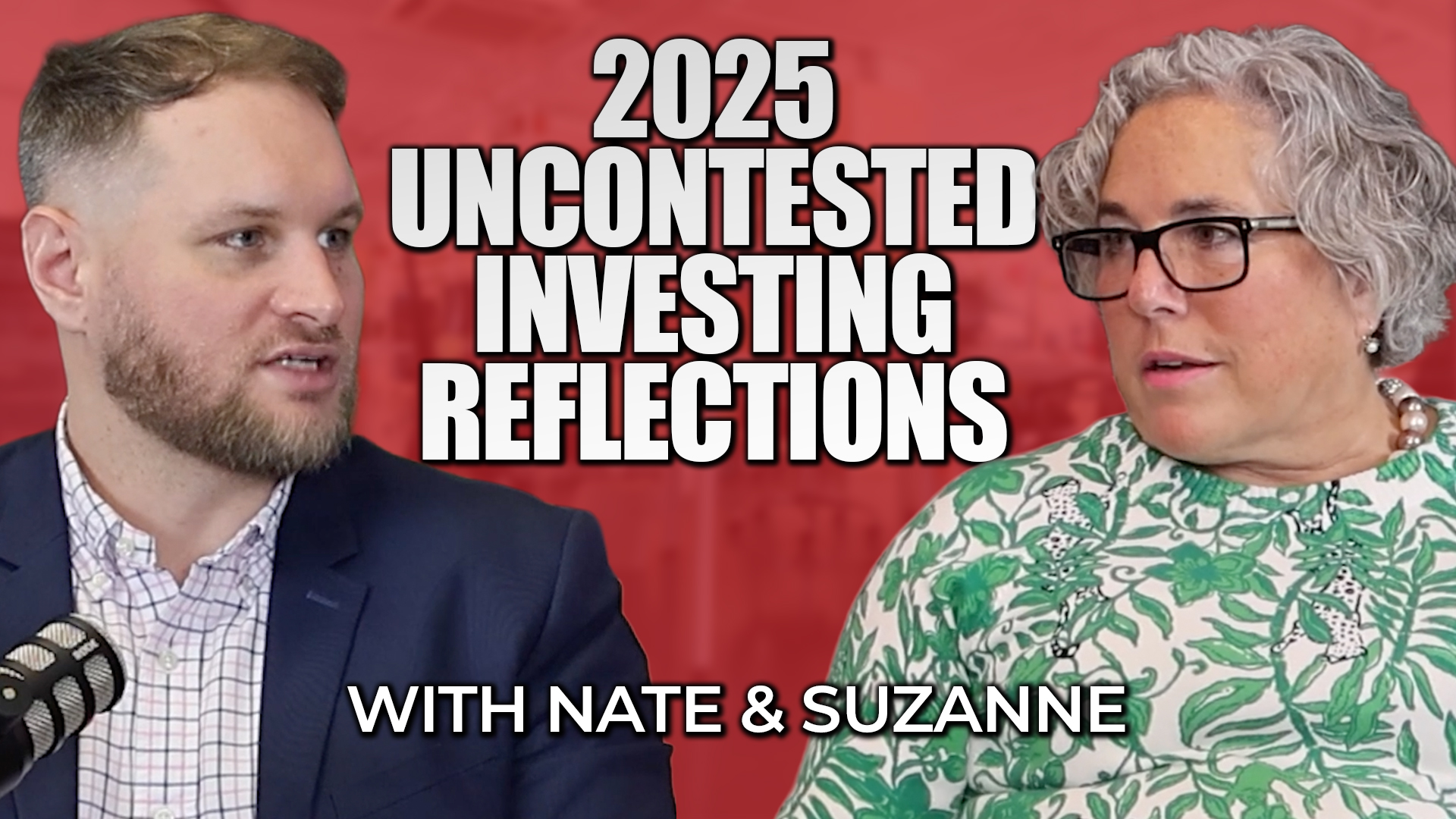
    In this episode of Uncontested Investing, we hit pause on deals and dive into something every real estate investor needs to do at least once a year: reflect, reassess, and reset your plan for the new year. We talk through how to review your wins, losses, systems, market strategy, portfolio performance, team, and mindset so you’re not just repeating the same year over and over.

    We cover how to celebrate business highlights, identify what actually moved the needle, and cut the processes, platforms, and partnerships that didn’t. We also dig into market insights, changing interest rates, new legislation, tenant screening, BRRRR, non-core dispositions, portfolio optimization, alternative capital (IRAs, 1031 exchanges), new markets, hiring, culture, personal habits, and community. 

    If you’re serious about leveling up your real estate investing business in 2026 and beyond, this episode will give you a practical framework to turn this past year’s lessons into a better plan, better systems, and better results

    Key Talking Points of the Episode

    00:00 Introduction

    01:16 Why investors should start with the wins before anything else

    02:10 Did you stay flexible when the plan broke?

    03:13 Owning the good and the bad

    04:11 Leading by example and being in the trenches with your team

    06:03 Operational lessons: systems that scaled vs. systems that broke

    07:25 Deal-level lessons: best vs. worst deals

    08:38 The importance of learning from your mistakes

    09:11 Team & partnership lessons: hiring, firing, and fit

    10:37 Firing is painful… but not firing can be worse

    12:00 Mindset lessons: did you actually become the CEO?

    13:44 Leveraging market insights for planning for the year

    14:15 Interest rates, scarcity & competitiveness

    15:22 New legislation & unlawful occupancy (squatting)

    16:50 Improving tenant screening processes

    18:17 Predictions vs. reality: did you pivot quickly enough?

    19:41 Reviewing your portfolio to choose properties to keep, fix, or sell

    20:45 Non-core strategy & using BRRRR to recycle equity

    21:36 Get your documentation and data ready before you need capital

    22:08 Goal-setting that actually sticks

    23:07 Strategic focus: new markets, assets, and models

    25:26 Team growth, onboarding & culture by design

    27:19 Professional & personal development

    28:31 Tracking results & embracing automation

    29:32 Community: one of the most underused levers

    30:03 Competition vs. collaboration

    Quotables

    “You need to personally acknowledge your strengths and weaknesses… being ready to relinquish control… that’s a huge hurdle when you transition from employee to owner.” 

    “Every successful investor that we’ve had on the show… they’ve all learned lessons the hard way. But it’s about taking those lessons and then turning them into success.” 

    “One of the most important lessons that we hope investors learn throughout the course of any year is that they can’t do this by themselves.”

    Links

    RCN Capital

    https://www.rcncapital.com/podcast

    https://www.instagram.com/rcn_capital

    info@rcncapital.com

    REI INK

    https://rei-ink.com/

  • Why Empty Houses Make No Money & Other Scaling Lessons Investors Miss with Bruce McNeilage

    Why Empty Houses Make No Money & Other Scaling Lessons Investors Miss with Bruce McNeilage

    In this episode of Uncontested Investing, we sit down with Bruce McNeilage, co-founder of Kinlock Partners, to break down what it really takes to scale a real estate portfolio across multiple markets and asset classes. With nearly two decades of experience building and operating thousands of units, Bruce shares hard-earned lessons from single-family rentals and build-to-rent communities to large multifamily developments and self-storage projects.

    We explore how Bruce identifies high-growth real estate markets like Nashville, Atlanta, and Columbia, why job drivers and industry concentration matter more than hype, and how investors can successfully transition from single-family investing into multifamily ownership. 

    Whether you’re a newer investor looking to scale responsibly or an experienced operator refining your strategy, this episode delivers a practical, no-nonsense roadmap to building durable cash-flowing assets, reducing risk, and growing long-term wealth through real estate investing.

    Key Talking Points of the Episode

    00:00 Introduction

    01:10 Who is Bruce Mcneilage?

    03:16 Bootstrapping growth without institutional capital

    04:28 Navigating niche communities and neighborhoods

    06:06 Scaling from SFR and build-to-rent to condo and multifamily development

    07:08 On-site maintenance, resident experience, and controlling operating costs

    10:14 Deal Breaker / Deal Maker: due diligence failures and early wins

    11:43 Financing challenges when moving from single-family to multifamily

    12:30 Operational risks: scale magnifies maintenance and management issues

    13:37 Market selection metrics: jobs, automotive plants, and economic drivers

    14:20 How to handle the complexities of multifamily property management

    16:35 The “collector” approach: managing multiple small properties efficiently

    18:53 “Empty houses make me no money” – vacancy, tenants, and cash flow philosophy

    20:26 Dealing with tenants: trespassing, squatters, and evictions

    21:53 Tenant screening: background checks, credit checks, and fraud prevention

    23:20 Tools and systems for tenant screening

    24:00 Starting small, bootstrapping portfolios, and long-term wealth building

    25:58 Hard work, sacrifice, and the realities behind long-term success

    27:17 Partnerships, complementary skill sets, and team building

    27:40 New projects: large-scale self-storage development

    Quotables

    “Empty houses make me no money.”

    “Ninety-two percent of this business is choosing the right tenant.”

    “People see the success, but they don’t see the 90% below the surface.”

    Links

    RCN Capital

    https://www.rcncapital.com/podcast

    https://www.instagram.com/rcn_capital

    info@rcncapital.com

    REI INK

    https://rei-ink.com/

  • Structuring Your Portfolio: LLCs, Partnerships, and Trusts

    Structuring Your Portfolio: LLCs, Partnerships, and Trusts

    In this episode of Uncontested Investing, we keep our tax and legal strategy series rolling with a topic every real estate investor needs to get right: how to structure your portfolio with LLCs, partnerships, and trusts. We break down how the right entity structure protects your personal assets, improves tax efficiency, and sets up clean estate and succession planning as you scale from one rental to a full portfolio.

    We walk through when to form an LLC, how to use partnerships to access capital and expertise, and where revocable and irrevocable trusts fit into long-term legacy planning. Then we hit the big stuff investors often overlook—state law compliance, partnership agreements, tax implications, and keeping documentation current—plus some practical action steps you can take this week with your attorney and CPA.

    If you’re serious about building a real estate investing business that actually protects you and your family, this one’s a must-listen.

    Key Talking Points of the Episode

    00:00 Introduction

    01:51 What is an LLC?

    02:40 LLCs, partners and ease of transferring ownership

    03:33 When should you set up an LLC?

    04:25 How LLCs limit liability between personal and business life

    05:05 How partnerships relate to LLCs

    06:00 General vs. Limited Partnerships in LLCs

    07:52 Shared risk, shared responsibility and quality of life

    08:31 Navigating partnership agreements: No handshake deals!

    10:21 What is a trust? 

    11:48 Trusts for generational wealth and avoiding probate

    12:33 Gift and estate tax advantages and divorce protection

    14:53 Key considerations when choosing LLCs, partnerships or trusts

    15:22 Compliance is key: Always consult professionals for your LLC

    16:28 Common mistakes to avoid when setting up your LLC

    17:33 Start with the end in mind

    18:23 Action steps for investors in setting up LLCs

    Quotables

    “As a real estate investor, your portfolio can become your identity. So you need to take ownership of it and structure it exactly how you want.” 

    “There’s no such thing as too early. You can even set up an LLC before you start investing in real estate.” 

    “Partnership agreements are not a handshake deal…these agreements have to be in writing.”

    Links

    RCN Capital

    https://www.rcncapital.com/podcast

    https://www.instagram.com/rcn_capital

    info@rcncapital.com

    REI INK

    https://rei-ink.com/

  • Cost Segregation Studies for Depreciation Benefits

    Cost Segregation Studies for Depreciation Benefits

    In this episode of Uncontested Investing, we are wrapping up our tax and legal strategy series with a deep dive into cost segregation studies and how they can supercharge your depreciation, tax savings, and cash flow. Most investors focus on appreciation – but if you’re not using depreciation the right way, especially on larger commercial and multifamily assets, you’re probably leaving money on the table.

    We break down what a cost segregation study actually is, which property types it makes sense for, and how engineers and specialized firms reclassify parts of your building into 5, 7, and 15-year property instead of 27.5 or 39 years. We talk through when to order a study, how it fits into your overall tax strategy, the real costs (often $10K–$30K), and the key risks like IRS scrutiny, recapture, and documentation.

    If you’re holding commercial, multifamily, industrial, or larger rental properties and you want every legal advantage to reduce taxable income and improve ROI, this conversation will give you a clear, practical framework to talk to your CPA, attorney, and a qualified cost seg firm about your next move.

    Key Talking Points of the Episode

    00:00 Introduction

    01:04 What is Cost Segregation? 

    02:21 The importance of cost segregation for investors

    03:29 ROI mindset: this is about increasing returns

    04:07 How cost segregation works: understanding depreciation

    05:01 Planning around depreciation schedules

    06:20 When is the best time to do a cost segregation study?

    07:37 The costs of a cost segregation study you need to know

    08:18 Balancing cost vs. benefit with a qualified firm

    09:43 Understanding the risks and considerations of a cost segregation study

    10:42 Why not all properties benefit from a cost segregation study

    Quotables

    “At the end of the day, the ROI is something that every investor’s looking for. They want the biggest ROI possible. So why not uncover every stone, and the cost segregation study is no different.” 

    “You’re not in this as a charity. You’re in this as a business. And let’s find the best way to get there.” 

    “Not all properties benefit equally… it’s not a one-to-one transaction where just because you made a certain amount of money on one that you’re going to make that every time you do a study.” 

    Links

    RCN Capital

    https://www.rcncapital.com/podcast

    https://www.instagram.com/rcn_capital

    info@rcncapital.com

    REI INK

    https://rei-ink.com/

  • The 1031 Exchange Playbook: How Investors Scale Faster While Deferring Taxes

    The 1031 Exchange Playbook: How Investors Scale Faster While Deferring Taxes

    In this episode of Uncontested Investing, we stay on our tax and legal strategies theme and break down one of the most powerful tools in real estate investing: the 1031 exchange. We walk through what a 1031 actually is, how it lets you defer capital gains taxes when you swap one investment property for another, and why it’s such a big lever for portfolio growth, net worth, and long-term scaling.

    We talk about the 45-day identification and 180-day closing rules, the role of a qualified intermediary, and how to move from a duplex into a four-family, commercial building, or even build-to-rent projects without triggering immediate tax. We also dig into estate planning, step-up in basis for your heirs, and advanced strategies like reverse exchanges, Delaware Statutory Trusts (DSTs), and combining multiple exchanges to diversify.

    Of course, we cover the other side too—strict timelines, zoning and legal pitfalls, choosing the wrong intermediary, and why you never want to “test” the IRS on this stuff. 

    If you’ve ever wondered how investors use 1031s to climb the ladder from small rentals to bigger assets while deferring taxes along the way, this episode gives you a clear, practical roadmap to get started. 

    Key Talking Points of the Episode

    00:00 Introduction

    00:41 What is the 1031 Exchange?

    01:31 How does a 1031 Exchange work?

    02:16 Using a Qualified Intermediary to facilitate the exchange

    03:05 Benefits of a 1031: Tax deferral and portfolio growth

    04:05 The impact of a 1031 Exchange on your purchasing power

    05:02 Eligible properties: What qualifies and what doesn’t

    06:40 The core rules of a 1031 Exchange

    07:38 Following the timelines and deadlines of a 1031 Exchange

    09:14 Top strategies to maximize 1031 Exchange benefits

    10:39 Planning your 1031 Exchanges with estate and succession in mind

    11:25 The risks and pitfalls of a 1031 Exchange

    14:48 How to get started with a 1031 Exchange

    15:55 Why documentation and audit readiness is important for a 1031 Exchange

    Quotables

    “The one person you never really want to challenge is the IRS.” 

    “This investment strategy is one that there’s no gray area. It’s very cut and dry.” 

    “You can expedite your success in real estate investing, but you have to go about it the right way.”

    LInks

    RCN Capital

    https://www.rcncapital.com/podcast

    https://www.instagram.com/rcn_capital

    info@rcncapital.com

    REI INK

    https://rei-ink.com/

  • How Opportunity Zones Could Be Your Next Opportunity with Tax Benefits

    How Opportunity Zones Could Be Your Next Opportunity with Tax Benefits

    In this episode of Uncontested Investing, we break down one of the most misunderstood tools in real estate tax strategy: Opportunity Zones. We unpack what a Qualified Opportunity Zone actually is, how the program was created under the Tax Cuts and Jobs Act of 2017, and why it matters for investors looking to defer capital gains, reduce tax liability, and potentially eliminate gains entirely on long-term projects.

    We walk through a real-world example from the Brunswick Naval Air Station in Maine, talk about converting old mills and strip malls into housing, and outline the three big tax incentives: deferral, step-up in basis, and full exclusion after a 10-year hold. Then we flip to the other side of the coin—market risk in distressed areas, zoning and code upgrades, long-term commitment, and why due diligence and local planning insight are non-negotiable.

    If you’ve been hearing about Opportunity Zones but aren’t sure how they work or whether they fit your strategy, this episode will give you a clear framework for spotting good OZ deals, avoiding landmines, and partnering with the right fund managers and tax pros.

    Key Talking Points of the Episode

    00:00 Introduction

    01:25 What are opportunity zones and how were they created?

    02:24 Not all opportunity zones are created equal

    03:20 Key tax benefits: deferral, reduction, and elimination

    04:25 Impact investing: breathing life into distressed communities

    05:02 Tax terms explained: Deferral of capital gains, step-up in basis, and more

    06:36 Housing shortage, mills, and adaptive reuse

    07:32 Qualified Opportunity Funds & 180-day rule

    09:24 Residential developments in opportunity zones

    10:28 Commercial and mixed-use opportunities

    11:27 Redevelopment & infrastructure improvement

    12:16 Build-to-rent on raw land in opportunity zones

    13:01 The market risks in a distressed area

    14:11 Planning board meetings and understanding regulatory and compliance risk

    15:39 Long-term commitment and exit strategy

    16:05 Do opportunity zones fit your investment goals?

    17:01 Partnering with experienced Opportunity Fund managers

    18:05 The importance of understanding property taxes when investing in opportunity zones

    19:16 Opportunity zones in broader economic development

    20:33 Scaling from residential to commercial

    Quotables

    “Not all opportunity zones are created equal, not all are going to be tailor made like the one that you found, but they still are a great investment opportunity.”

    “What doesn’t look like a pretty picture on the onset can actually going to be one of the most fruitful investments that an investor can make.”

    “Do they align with your investment goals. Don’t just do it because it’s trendy or because you heard about it on a podcast.”

    Links

    RCN Capital

    https://www.rcncapital.com/podcast

    https://www.instagram.com/rcn_capital

    info@rcncapital.com

    REI INK

    https://rei-ink.com/

  • The Hidden Profit Lever That Boosts Cash Flow and NOI Through Property Tax Appeals with Alison Tulio

    The Hidden Profit Lever That Boosts Cash Flow and NOI Through Property Tax Appeals with Alison Tulio

    In this episode of Uncontested Investing, we dive deep into one of the most powerful (and ignored) ways to increase cash flow and boost NOI: property tax appeals. I’m joined by Alison Tulio, President of Incenter Tax Solutions and a seasoned real estate attorney who specializes in helping investors reduce over-assessed property taxes on both residential and commercial real estate.

    Whether you own single-family rentals, multifamily, office, industrial, or manage multi-state real estate portfolios, this episode will show you how your property tax bill is quietly eating into your returns and what you can do to fix it. Alison explains why assessments are climbing nationwide, how COVID reshaped office and industrial values, and why distressed commercial properties are some of the best candidates for aggressive tax appeals right now.

    We break down practical, zero-risk steps you can take to:

    • Get your property taxes reviewed annually

    • Spot when you’re over-assessed and leaving money on the table

    • Avoid common mistakes investors make when they appeal property taxes on their own

    • Protect yourself from triggering a tax increase by misunderstanding local rules

    Alison also shares a real-world case study where a skeptical client saw a 63% reduction on a single property and saved $180,000 in property taxes without taking on additional risk. If you care about net operating income (NOI), commercial property values, and keeping more cash in every deal, this conversation is a masterclass on how to lower your property taxes, increase cash flow, and improve returns on your real estate investments. Tune in, take notes, and start treating property tax strategy like the profit lever it really is.

    Key Talking Points of the Episode

    00:00 Introduction

    00:52 Who is Alison Tulio?

    01:24 Reinventing in down cycles (2008 & COVID)

    02:01 Who Incenter Tax Solutions serves

    03:15 The Incenter Tax Solutions mission: Education first

    04:25 Helping investors understand and leverage property taxes

    05:20 Nationwide coverage & portfolio streamlining

    06:30 Alison’s time as outside counsel to lenders & servicers

    07:38 Deal Maker/Deal Breaker: The turning point in Alison’s career

    09:06 Why you should have your property taxes reviewed

    10:07 How to get started with Incenter Tax Solutions

    11:20 Why tax strategy education is important for real estate investors

    12:07 Most common mistakes investors make regarding property taxes

    13:57 What’s the Word? Work hard, play hard

    15:24 Opportunity zones and planning for abatements

    16:48 Tools & proprietary software for property tax assessment

    17:45 Case Study: From skeptic to $180K in savings

    18:50 How Incenter Tax Solutions educates investors

    19:46 Market strategy and COVID-hit cities

    20:24 Alison’s life outside of real estate: Family, salt life, working out

    21:12 How to get in touch with Alison

    Quotables

    “We’re saving, I mean, we’re slashing those property taxes in half and commercials are big ticket items.”

    “You should 100% have someone look at your property taxes every year.”

    ”Trust the process. You’ll see that it’s really not too good to be true, and it actually works.”

    Links

    Incenter Tax Solutions

    https://incentertaxsolutions.com

    Alison Tulio

    https://www.linkedin.com/in/alison-tulio-esq-70229519a

    RCN Capital

    https://www.rcncapital.com/podcast

    https://www.instagram.com/rcn_capital

    info@rcncapital.com

    REI INK

    https://rei-ink.com/

  • Protecting Your Portfolio: Expert Strategies for Risk, Claims, and Coverage with Alex Glickman

    Protecting Your Portfolio: Expert Strategies for Risk, Claims, and Coverage with Alex Glickman

    In this episode of Uncontested Investing, we sit down with Alex Glickman, the Global Real Estate & Hospitality Practice Leader at Gallagher and one of the most trusted experts in real estate insurance and risk management. With more than 40 years in the industry, Alex has navigated every market cycle, natural disaster, and underwriting shift, giving her unmatched insight into how investors can protect their portfolios in today’s environment.

    We dive deep into how climate events, rising insurance premiums, and increased claim activity are transforming the way lenders and carriers evaluate real estate deals. Alex explains the key insurance policies every real estate investor must understand, how risk is priced, and the major blind spots investors often overlook like pollution liability, tenant-related losses, builder’s risk coverage, and professional liability.

    If you want to learn how insurance truly impacts your deal analysis, cash flow, lender requirements, and long-term portfolio strategy, this episode delivers a masterclass in real estate risk mitigation and asset protection from one of the brightest minds in the industry.

    Key Talking Points of the Episode

    00:00 Introduction

    01:15 How Alex accidentally entered insurance after not getting into Harvard Law

    02:01 Building a career in a “stodgy” industry and redefining real estate risk

    03:00 What drives Gallagher’s innovative insurance products

    03:52 How storms, wildfires, and extreme weather affect investor insurance strategies

    05:37 Why floods are now being reported on every real estate deal

    06:38 How insurance actually protects people during their worst moments

    07:31 Lender requirements vs. investor needs—why these often clash

    08:04 Why real estate insurance is not one-size-fits-all

    09:18 Leading a global practice and the importance of learning international norms

    11:53 Taking a stand: the career-defining moment that changed Alex’s life

    13:52 The must-have insurance policies every real estate investor should understand

    15:05 Pollution liability: the most overlooked risk in multifamily & SFR

    16:25 Insurance needs for fix-and-flips, new construction, and ground-up projects

    17:06 Landlord policies vs. tenant policies—who covers what?

    18:20 Can landlords create revenue streams from tenant insurance? 

    19:45 Liability risks investors must understand (injuries, explosions, pet issues, more)

    22:26 One-word motto for investors: “One more step.”

    23:12 How AI and tech are transforming real estate insurance

    24:40 Predictive modeling, storm path forecasting, and real-time risk analytics

    25:18 Why cheap insurance can destroy your investment

    26:55 What’s next for Gallagher and Alex’s mission to reshape the industry

    Quotables

    “Insurance is not monolithic. Real estate is not monolithic. You need someone who understands your asset type.”

    “One more step. If you take one more step than everybody else every day, you will be successful.”

    “I don’t fear bullies. That moment changed my life—and I’ve never looked back.”

    Links

    RCN Capital

    https://www.rcncapital.com/podcast

    https://www.instagram.com/rcn_capital

    info@rcncapital.com

    REI INK

    https://rei-ink.com/

  • The $1 Billion Real Estate Scam Being Solved by Property Shield with Alex Fahsel

    The $1 Billion Real Estate Scam Being Solved by Property Shield with Alex Fahsel

    In this episode of Uncontested Investing, we sit down with Alex Fahsel, the co-founder of Property Shield, a groundbreaking company that’s changing how investors protect their assets from fraud and scams.

    At just 23 years old, Alex built Property Shield while finishing college at the University of Georgia—and today, it operates in over 35 states, helping investors prevent rental fraud, wire fraud, and title scams that have cost renters and landlords more than a billion dollars.

    We unpack how AI and machine learning are being used to fight fraudulent listings, what every investor needs to know about protecting their portfolios, and how small investors can stay one step ahead of increasingly sophisticated scammers.

    If you invest in single-family rentals, multifamily properties, or land, this episode is your crash course in risk management, due diligence, and fraud prevention straight from one of the brightest young innovators in the industry.

    Key Talking Points of the Episode

    00:00 Introduction

    01:15 How an internship at Progress Residential inspired Alex’s idea

    02:25 Turning a college project into a real business

    03:40 The birth of Property Shield and early lessons learned

    04:48 How AI detects fraudulent listings and impersonations online

    07:28 The shocking scale of real estate fraud across major cities

    09:04 The devastating impact of fraud on mom-and-pop investors and tenants

    11:07 Property Shield’s nationwide growth and expansion goals

    13:08 Why small property managers and investors are hardest to reach

    15:28 The first deal that changed everything—finding trust and opportunity

    17:45 Breaking down other common types of real estate fraud

    20:30 Wire fraud and phishing—why the biggest scams happen before closing

    23:06 Using AI and automation to detect scams faster than ever

    24:23 Deepfakes, AI-generated voices, and the next wave of fraud risks

    26:10 How persistence can help you achieve success 

    27:23 Why investors should always use title companies and attorneys

    28:07 How Property Shield is developing new partnerships to fight title fraud

    29:50 The goal: catching fraudulent listings before they ever go live

    31:38 Future of Property Shield: predictive analytics and risk scoring

    Quotables

    “We’re seeing that between 20 and 25% of all online real estate listings have at least one fraudulent duplicate.”

    “Fraudsters are using AI, so we have to use AI. It’s the only way to keep up.”

    “Persistence. That’s the one word I’d use to sum up this journey. You just keep chugging along.”

    Links

    Property Shield

    https://propertyshield.co

    RCN Capital

    https://www.rcncapital.com/podcast

    https://www.instagram.com/rcn_capital

    info@rcncapital.com

    REI INK

    https://rei-ink.com/